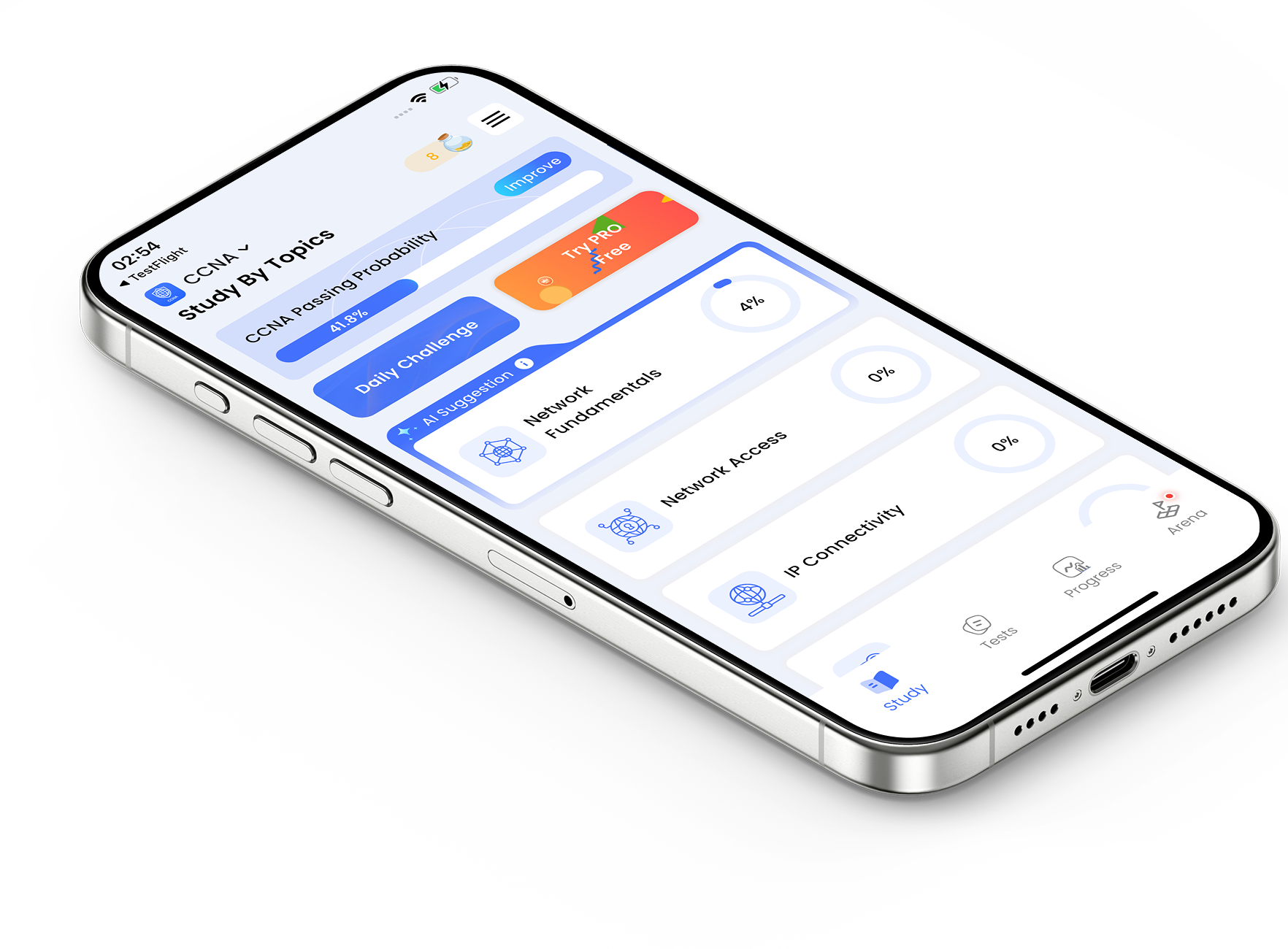
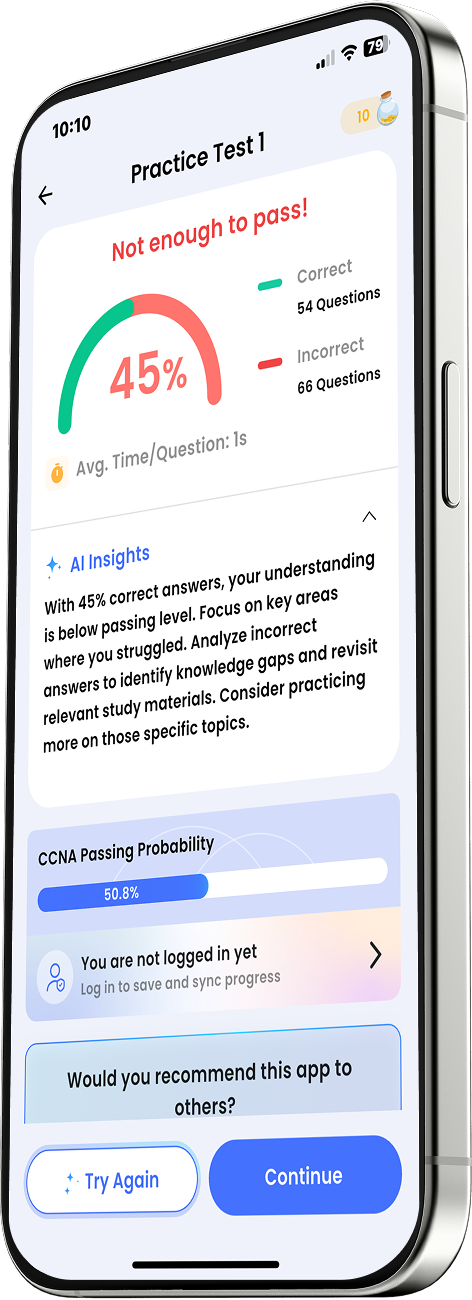
If you’re preparing for the CCNA exam, you already know how challenging the IP Connectivity domain can be. Many learners struggle with routing concepts, next-hop decisions, and interpreting network topologies under pressure. That’s exactly why a CCNA IP Connectivity Practice Test is one of the most effective tools to master this exam objective. Let’s dive into the plethora of practical questions that help you sharpen your knowledge and improve testing skills without paying any fees.
What’s covered in our CCNA IP Connectivity Practice Test?
The CCNA exam dedicates a significant portion of its scoring to routing and connectivity. A strong command of these topics is essential, especially since they form the backbone of every enterprise network. Our practice test mirrors the structure, complexity, and cognitive difficulty of the actual exam. Below is a breakdown of what you’ll encounter.
Interpreting routing table components
Understanding a routing table is essential for any network engineer. Our test evaluates your ability to interpret each component, including:
Routing protocol code: Identify which protocol installed the route (e.g., OSPF, EIGRP).
Prefix: Recognize the network portion of the route.
Network mask: Understand subnetting and mask notation.
Next hop: Determine where the router forwards packets.
Administrative distance: Compare the trustworthiness of multiple routes.
Metric: Evaluate the cost assigned by a routing protocol.
Gateway of last resort: Identify default routes used when no specific match exists.
These questions simulate real CCNA exam patterns, helping you become familiar with Cisco-style logic and syntax.
Router forwarding decisions
Our practice test reinforces how routers make forwarding decisions based on multiple criteria:
Longest prefix match: Ensure packets follow the most specific route.
Administrative distance: Resolve conflicts when multiple protocols provide routes to the same network.
Routing protocol metric: Select the best path based on cost or hop count.
These questions help you develop the analytical skills to quickly interpret routing tables and predict packet paths.
IPv4 and IPv6 static routing
Static routing is foundational for small networks and backup routes. Practice scenarios include:
Default route: Configure a “gateway of last resort” for all unknown traffic.
Network route: Create static routes to reach specific networks.
Host route: Define static routes for individual IP addresses.
Floating static route: Implement backup routes with a higher administrative distance.
Candidates will also practice verifying routes using CLI commands to ensure correct network reachability.
Single-area OSPFv2
OSPF remains a critical skill for CCNA candidates. Our test covers OSPF in a single-area setup, including:
Neighbor adjacencies: Ensure routers correctly form neighbor relationships.
Point-to-point networks: Configure OSPF for simple P2P links.
Broadcast networks (DR/BDR selection): Understand elections and link types.
Router ID assignment: Verify how routers identify themselves within OSPF.
Scenario-based questions allow you to troubleshoot adjacency and route propagation issues just like in real networks.
First Hop Redundancy Protocols (FHRPs)
Our practice test also introduces high availability concepts to ensure network reliability:
Purpose: Understand why FHRPs like HSRP, VRRP, or GLBP are used.
Functions: Learn how these protocols provide seamless failover.
Key concepts: Identify active, standby, and virtual IP addresses.
These questions help you prepare for practical situations where default gateways must remain available despite device failures.
Mastering routing is essential for passing the CCNA, and the best way to build real confidence is through guided, realistic practice questions. A strong CCNA IP Connectivity Practice Test gives you the skills you need to interpret routing tables, configure OSPF, identify next-hop errors, and troubleshoot network paths. If you're serious about passing the exam on your first try, start practicing this specific domain today and expand the scope with the whole CCNA practice test.